

What It Means To Turn 11 Years Of Anorexia Into Purpose
Eleven years of measuring every gram of food. Eleven years of stepping on the scale like it was an altar. Eleven years refusing to enter a grocery store because I didn’t want anyone to associate me with food.
Eleven years of my mind turned against me with terrifying precision.
The Paradox
From the outside, I was a paradox. High-achieving. Top grades. Ballet. Sports. Singing. Acting. A perfectionist who excelled at everything except eating.
From the inside, it wasn’t a paradox at all. The achievements and the restrictions were the same system. The same relentless discipline that earned straight A’s was the same discipline that counted calories in vitamin supplements. The same intensity that pushed me to perform was the same intensity starving me.
Anorexia wasn’t my weakness. It was the engine I mistook for power.
The System
People ask what it was like. The honest answer: it was sacred.
I closed the curtains so the birds wouldn’t witness me eating half an apple a day. I spent thirty minutes washing fruit to remove imaginary calories. I measured my limbs multiple times a day, like someone checking the structural integrity of a building about to collapse.
For eleven years, my weight never exceeded 35kg, and my BMI was always below 12.5.
Every ritual, every rule, every measurement was part of a system I’d built with the same precision I applied to everything else. The disorder wasn’t chaos. It was control. Total, absolute, “mesmerising“ control. And I was in love with it.
The Truth No One Wants to Hear
Here’s what most recovery stories don’t tell you: I didn’t want to heal.
For years, therapists tried. Hospitals admitted me. Programs enrolled. Medications suggested. None of it worked because I wasn’t interested in being saved. I was interested in perfection, and anorexia was the only thing that felt perfect. The truth is harsh, but it’s real: I was grateful to the professionals who tried to reach me, but I spent years making sure they couldn’t.
Anorexia fed my perfectionism until every aspect of my life, school, performance, and appearance became a source of terror. It was a standard that didn’t allow for the messiness of being human. And I preferred that to the alternative. Until I didn’t.
The Moment
People ask what changed. Was it therapy? A revelation? A meditation? The honest answer: I don’t know. But what I do know is that there was a sudden, traumatic family situation in which something shifted. After eleven years, one sentence became utterly clear: “Food is life.”
I saw, almost from the outside, what anorexia had done to me. I realised I deserved something other than calculated pain. I deserved happiness. I deserved to live. That realisation didn’t erase the illness. But it changed the direction of my will.
The Same Mind
The same mind that nearly killed me became the mind that saved my life.
The same discipline that restricted food became the discipline that chose recovery every single day.
The same intensity that created the disorder became the intensity that dismantled it.
Recovery wasn’t romantic. It was brutal and ordinary at the same time. I had to push back against obsessive thoughts every minute. I had to eat when every cell screamed not to. I had to disappoint the “anorexic version” of myself to keep the real me alive. But I kept moving.
Step by step. Meal by meal. Moment by moment.
And with each act of defiance, I proved to myself: my mind wasn’t broken. It was just pointed in the wrong direction.
The Restaurant
I remember the first time I agreed to go to a restaurant and actually eat something. Normally, the thought would trigger full panic. Eating outside. Unknown calories. Unknown preparation. People watching. But this time, I decided: I can do this. I walked in despite the noise, the voices, the fear. Despite feeling like I was betraying my eating disorder. (Yes, I felt sad leaving my “anorexic friend” behind. That’s how twisted it gets.) But I knew a better friend was waiting, one who’s actually kind to me and doesn’t want me dead.
And to make it properly adventurous, I didn’t order a sad green salad. I ordered strukli, a Croatian delicacy – handmade cottage cheese dumplings oven-baked in rich cream. Because if you’re going to betray your anorexia, you might as well do it properly ;).
Today
Today, I have a healthy, joyful relationship with food. I love cooking for friends and family. I wake up without dread. I look in the mirror and see a whole person, not a set of measurements. My anorexia is my past life. It shaped who I am, but it doesn’t define me anymore.
And it taught me something I’ll never forget: the mind that can destroy you is the mind that can rebuild you.
Why Beauty of Mind Exists
I didn’t build BOM to be your guru. I’m not here to tell you how to heal or pretend I have a formula that works for everyone. I don’t.
I built BOM because that realisation – your mind can destroy you or save you – is universal. It applies to eating disorders. To anxiety. To burnout. To anyone who has ever felt their mind was an enemy instead of an ally.
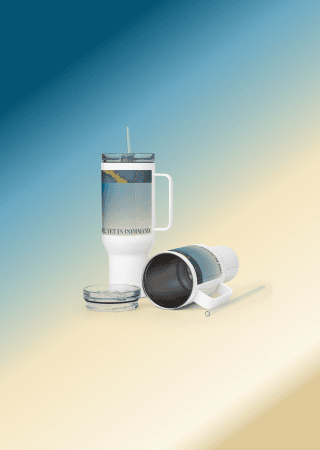
These pieces, “artefacts” we create, aren’t magic. A hoodie won’t fix your trauma. A mug won’t cure your disorder. Only your mind can do that. But these reminders exist for the moments you forget. The moments when recognising your own power feel impossible. The moments when you need something physical to ground you in a truth the noise won’t let you hear:
Your mind is your greatest ally.
The Commitment
We give 20% of every sale to eating disorder organisations. Not because we think it solves everything. But because eating disorders have the highest mortality rate of any mental illness and receive less than 1% of research funding.
The message is universal. The funding is specific.
I built BOM for anyone who’s ever needed to be reminded that the mind creating their suffering is the same mind capable of creating their freedom.
XOXO, Lucy, Founder
© 2026 Beauty of Mind Ltd. All rights reserved. The moral rights of the author have been asserted. No part of this story may be reproduced or transmitted without prior written permission. However, we warmly encourage you to share the link to this story with anyone who may find it valuable.